

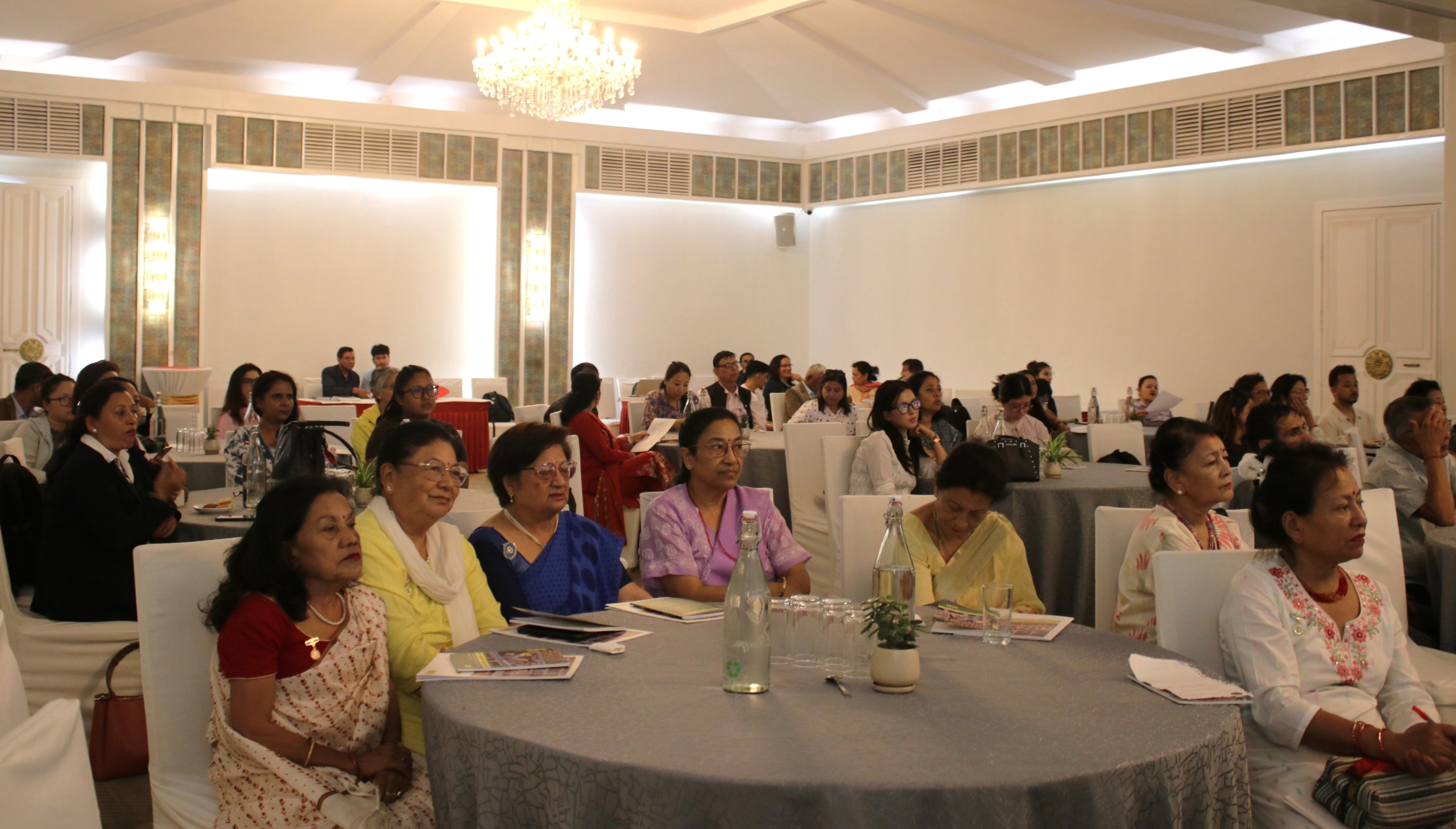
On 21 September 2026, marking World Alzheimer’s Day, human rights defenders, legal and medical practitioners, caregiving professionals and families of people affected by Alzheimer’s disease and dementia came together to discuss a question that is often overlooked: How can care for older people be grounded in human rights?
The discussion highlighted the need to recognize older people not simply as recipients of care and social protection, but as rights holders whose autonomy and dignity must be respected. Participants raised concerns about neglect of older people, denial of their autonomy and agency, lack of adequate data on Alzheimer’s disease and dementia in Nepal, and the need for greater awareness, early diagnosis and appropriate care. The discussion took place against the backdrop of the formation of a UN intergovernmental working group tasked with drafting an international legally binding instrument on the human rights of older people.
Centering the discussion from welfare to rights
Opening the programme, advocate Bishnu Pokhrel, Deputy Executive Director of JuRI-Nepal and moderator of the programme, reflected on Nepal’s constitutional and legal protections for older people. He emphasised the need to understand Alzheimer’s disease, dementia and other issues affecting older people through a human rights lens.
Tanuja Basnet, Chairperson of JuRI-Nepal, spoke about the significance of World Alzheimer’s Month in raising awareness about the disease, including dementia. She stressed that discussions on older people should not be limited to old-age allowances and social security and that it should cover the full spectrum of their human rights.
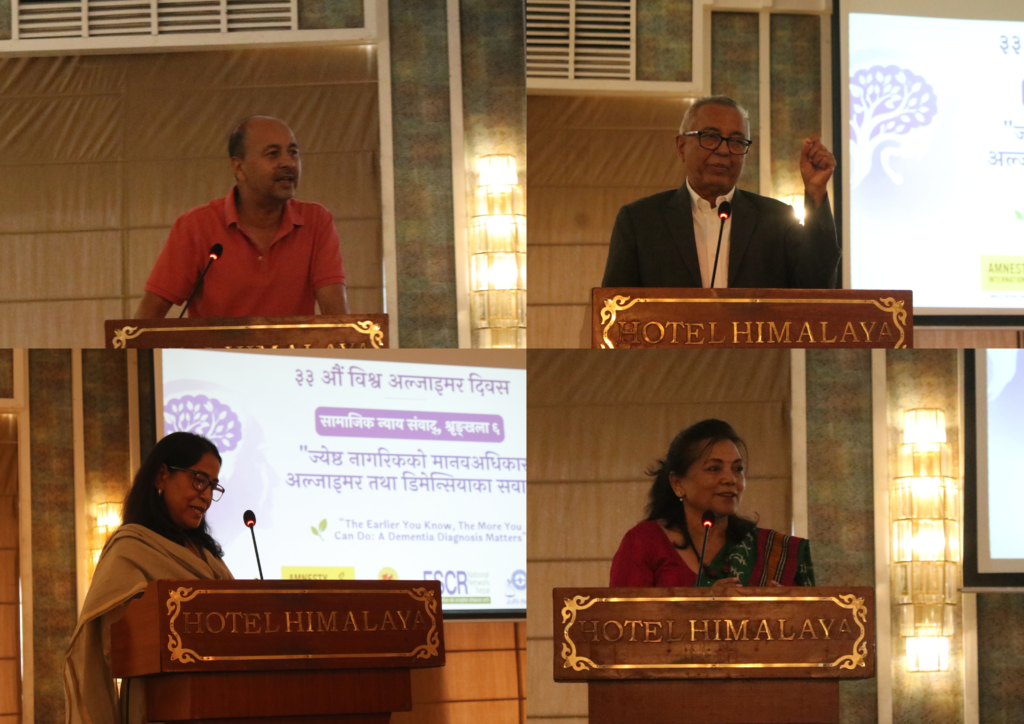
Basnet also stressed the need of an intersectional approach, noting that older people are not a homogenous group as they include women, Dalits, Madhesis, Indigenous Peoples, people with disabilities, sexual and gender minorities and people from other marginalised communities. She called for changes in law, policy and social attitudes so that the currently prevailing charity-based approach towards older people can be replaced by one that is based on human rights.
Following the opening remarks, Pramila Bajracharya, Chairperson of Hope Hermitage Nepal, delivered a presentation titled “Dementia Care: Balancing Dignity, Safety and Human Rights – A Rights-Based and Safeguarding Framework for Families and Care Providers.” Drawing on the organisation’s experience in dementia care, Bajracharya discussed how greater public understanding of Alzheimer’s disease and dementia can help families recognise, reduce stigma, and prevent conflict within families and mistreatment.
She also highlighted the need for specialized caregiver training, particularly for people with advanced dementia who may require round-the-clock assistance with hygiene, nutrition and other everyday activities. Another critical concern raised was in regards to autonomy and financial security of people with dementia.
She also identified several safeguards, including advance care planning and directives, supported decision-making, protection of pensions from misuse, accountability of guardians, safeguards against abuse, independent complaint mechanisms and the right to choose care.
Dignity, autonomy and the State’s responsibility
The keynote speakers then discussed the situation of older people in Nepal from different perspectives, including legal assumptions regarding the capacity of older people, gaps in disaggregated data, and the efforts made so far in Nepal for a rights-based approach to address the requirements of older people.
Khemraj Upadhyay, former Country Director of HelpAge International, highlighted the challenges older people face in accessing their rights and maintaining their dignity and autonomy. He noted that many older people in Nepal still lack citizenship certificates, preventing them from accessing essential services and entitlements. He also highlighted the gender dimension of care, noting that women are often expected to take on caregiving roles. This places an additional burden on women whose husbands are living with Alzheimer’s disease, while women living with the disease are often neglected by their spouses. He therefore stressed the importance of respecting the autonomy and rights of both caregivers and care recipients. Upadhyay also emphasized the need to address the neglect of older people and called for an intersectional approach, noting that other forms of discrimination—including caste, poverty and disability—can compound age-based discrimination. He further stressed the need for updated data on Alzheimer’s disease, noting that the State continues to rely largely on estimates. Better data, he argued, is essential to ensure an appropriate response and uphold the dignity and rights of people living with Alzheimer’s disease.
Durga Sob, Founder of the Feminist Dalit Organization (FEDO), emphasises the importance of intersectionality. She noted that the experiences of older people living with Alzheimer’s disease and dementia can be different based on their socio-economic identity and circumstances especially in the context of Nepal where caste-based discrimination is rife.
She also raised the issue of the lack of solidarity among development organisations and civil society organisations working in different sectors. She also spoke about the need for disaggregated data and noted that caste-based discrimination has prevailed even in spaces that are meant to provide care for older people. She emphasised that it is the State that should bear the primary responsibility for protecting and fulfilling the rights of older people.
Gyan Bahadur Adhikari, Vice-Chairperson of Hope Hermitage Nepal, reflected on family and social structures in Nepal and what they mean for the care of older people. He raised concerns about legal assumptions that may limit older citizens’ ability to manage or dispose of their property and called for greater respect for their autonomy, including their ability to make decisions about their property and the type of care they prefer as they age.
Shanta Laxmi Shrestha, Member of the National Senior Citizens Federation, stated that existing approaches continue to treat ageing primarily as a matter of welfare or charity rather than through a human rights perspective. Shrestha also cautioned against treating older people as a homogenous group and called for approaches that recognize differences within older people. With people living longer and remaining active as they age, she called for policies that promote and support active and healthy ageing, participation, socialisation and dignified living along with appropriate systems of care.
Early diagnosis and better systems of care
A panel discussion moderated by Dr. Ananta Aryal, geriatric physician at Bir Hospital, brought together medical, government, and legal perspectives on approaches and policy regarding care for Alzheimer’s disease and dementia.
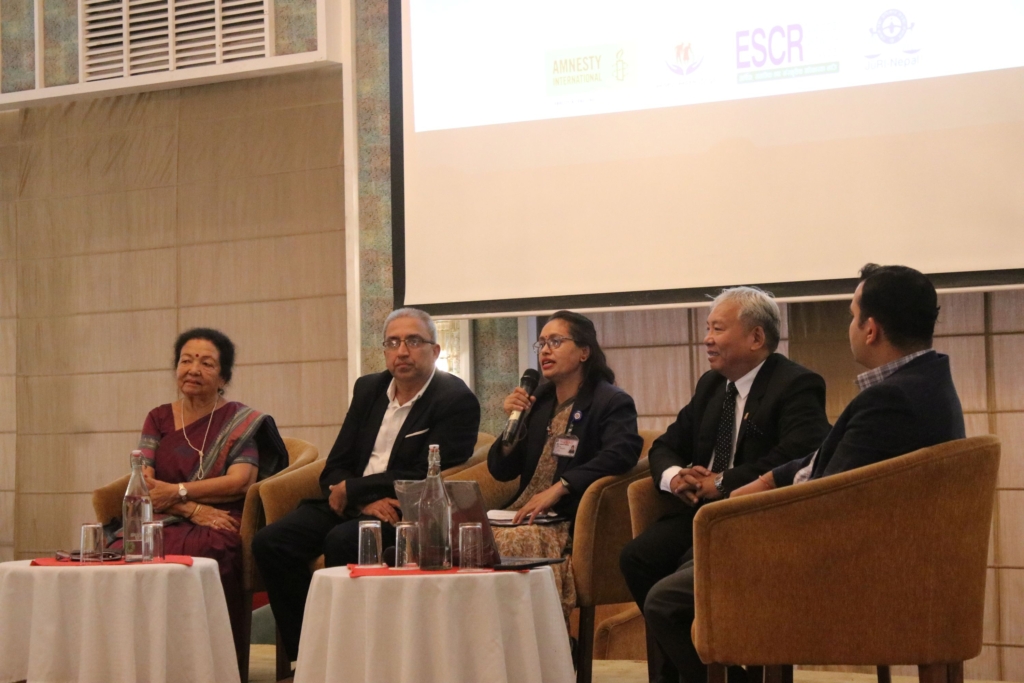
Prof. Dr. Nidesh Sapkota, Chief of the Department of Psychiatry at Patan Hospital, discussed the medical perspective of dementia and talked about the importance of early and correct diagnosis. He also stressed that early diagnosis provides an important opportunity for medical counselling and also provides families to have discussions about legal issues and preferences for care before the condition progresses.
Hira Kumari Niraula, Director at the GBV-Nursing and Social Security Division of the Ministry of Health, shared information about a draft national action plan on dementia. She shared that its focus is on prevention, awareness, early diagnosis, caregiver capacity-building and multisectoral coordination. She also discussed plans regarding screening mechanisms and protocols, documentation and expansion of memory clinics.
Senior Advocate Khem Thapa focused on the autonomy of people with Alzheimer’s disease and dementia and the need to ensure that their fundamental rights are respected throughout their care. He also raised concerns over several harmful or undignified treatment and practices that may have become normalised through tradition.
Vijaya KC, President of the Alzheimer’s disease and Related Dementia Society, traced the organisation’s continuing efforts to raise awareness about Alzheimer’s disease and dementia since the organisation’s founding. She stressed that policymakers must also take into consideration the needs and wellbeing of caregivers and called for greater collective engagement on the issue.
Putting older people’s voices at the centre
In his closing remarks, Nirajan Thapaliya, Director of Amnesty International Nepal, highlighted Amnesty International’s global campaign named Age Out Loud, launched in 2024. The campaign seeks to raise voices against all forms of systemic discrimination and ageism faced by older people as well as violence, abuse, neglect, inadequate social protection and treatments that diminish their autonomy. He also highlighted substantive and procedural gaps in the international human rights framework concerning the rights of older people, including the absence of a specific international convention protecting their rights.
He stressed that international human rights law, as well as Nepal’s domestic laws and policies, should ensure the voice, agency, participation and overall inclusion of older people while protecting their rights. Amnesty International Nepal reaffirmed its commitment to advancing the rights of older people and to working with health professionals, government authorities, rights holders, campaigners, human rights defenders and other stakeholders to strengthen rights-based approaches to ageing, Alzheimer’s disease and dementia.