
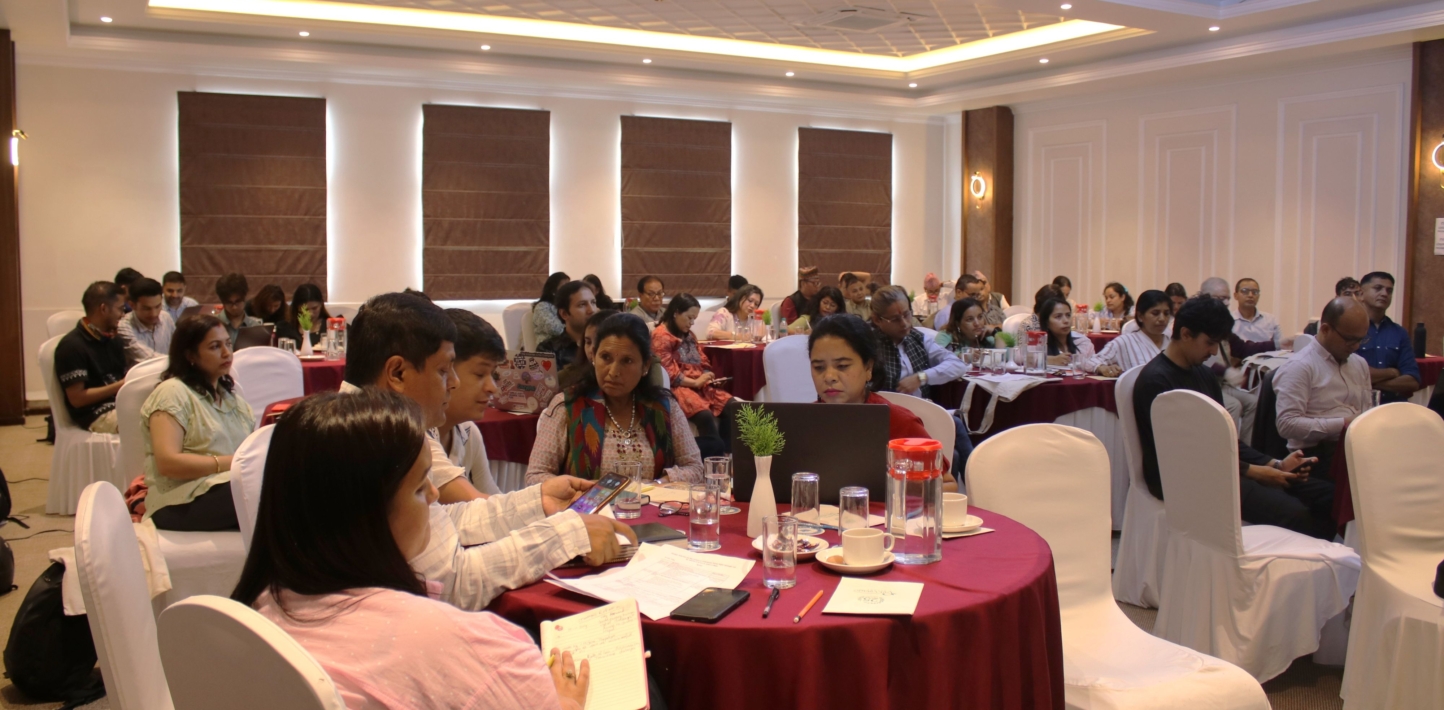
Human rights defenders, lawyers, journalists, Gen-Z activists, and civil society representatives gathered in Kathmandu on 10–11 July for a two-day strategic reflection programme to discuss Nepal’s evolving human rights landscape and identify collective responses to growing challenges affecting the enjoyment of fundamental rights, including right to adequate housing, right to freedom from torture and ill-treatment, right to safety, security and dignity, freedom of expression, association and assembly, access to justice, rule of law and accountability.
Jointly organized by Amnesty International Nepal, Advocacy Forum, and Accountability Watch Committee, the programme provided a platform for participants working across different human rights issues to exchange experiences, strengthen solidarity and develop collaborative strategies for future advocacy.
Discussions focused on three broad themes: transitional justice, rule of law and accountability; discrimination, exclusion and the denial of economic, social and cultural rights; and shrinking civic space and freedom of expression. Participants also reflected on ways to strengthen coalition and coordination across Nepal’s human rights movement and meaningfully engage younger generations in advancing human rights.
Opening the programme, Nirajan Thapaliya, Director of Amnesty International Nepal, highlighted the need for a renewed solidarity at a time when Nepal faces shrinking civic space, persistent impunity, forced evictions and continued barriers to justice. He emphasized that protecting human rights is a shared responsibility that extends beyond activists and victims, calling for stronger collaboration across movements and greater engagement of Gen-Z activists, who will play a critical role in advancing future accountability efforts.
The first session examined Nepal’s stalled transitional justice process, which has made little progress nearly two decades after the signing of the Comprehensive Peace Agreement (CPA) in November 2006. Conflict victims, human rights advocates and legal experts reflected on the government’s continued failure to deliver truth, justice, accountability and reparations to victims of the armed conflict.
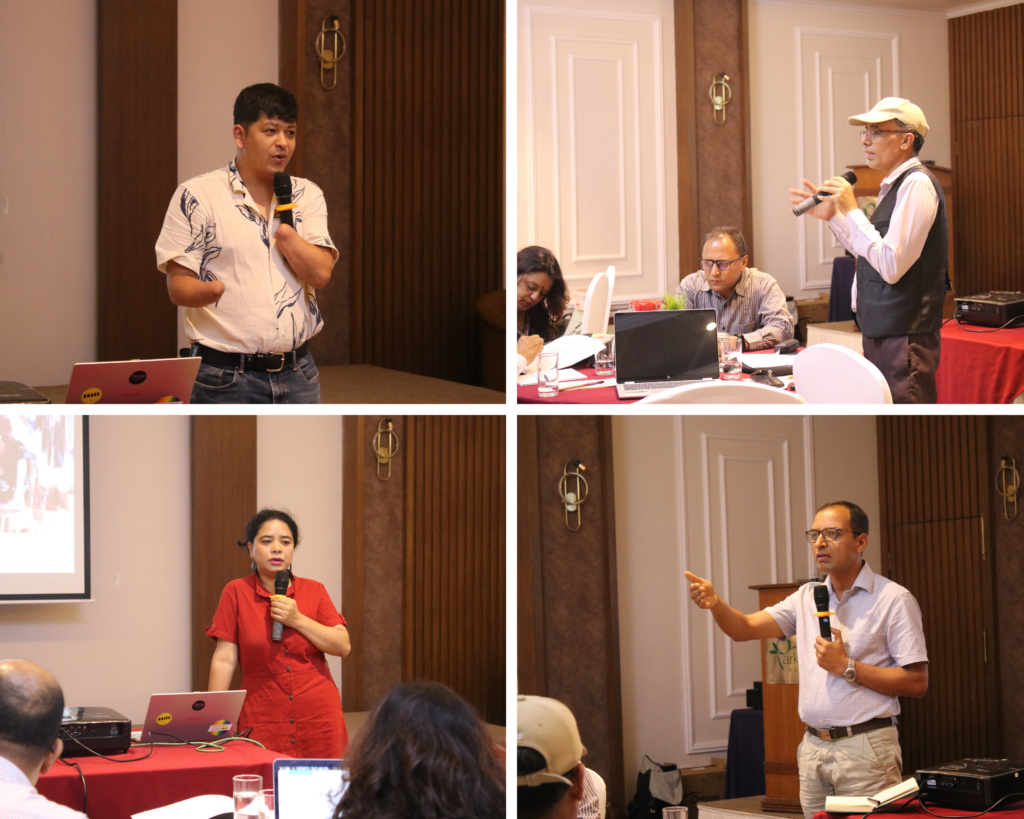
Speakers—including senior advocate and Coordinator of Accountability Watch Committee Raju Prasad Chapagai; activist and conflict victim Suman Adhikari; Chairperson of the Conflict Victim Women National Network Gita Rasaili; conflict victim and transitional justice expert Dr Ram Kumar Bhandari; and Chairperson of the National Network of Disabled Conflict Victims Surendra Khatri—shared their observations, including personal experiences of loss, structural alienation, denial, manipulation in the midst of their decades long struggle for truth and justice, and the impact of overly political interference on the transitional justice law and commissions. Participants also highlighted the experiences of women affected by the conflict, survivors of conflict-related sexual violence, families of the disappeared, and civilians living with conflict-related disabilities, many of whom continue to face exclusion from official recognition and reparations.
The discussions underscored that accountability requires more than criminal prosecution. Participants stressed the importance of reparative and distributive justice, including addressing the structural inequalities that contributed to the conflict and ensuring that victims remain at the center of the transitional justice process.
The second session focused on forced evictions, landlessness and access to land as fundamental human rights issues. Speakers, including land rights expert Dr Jagat Basnet and Bhagawati Adhikari, Executive Director of Nepal Mahila Ekata Samaj, examined the historical, social, cultural, economic and political dimensions linked to land, identity, citizenship and unjust state policies, highlighting how unequal land distribution and flawed administrative practices have contributed to long-standing exclusion, marginalization and injustice in Nepal.
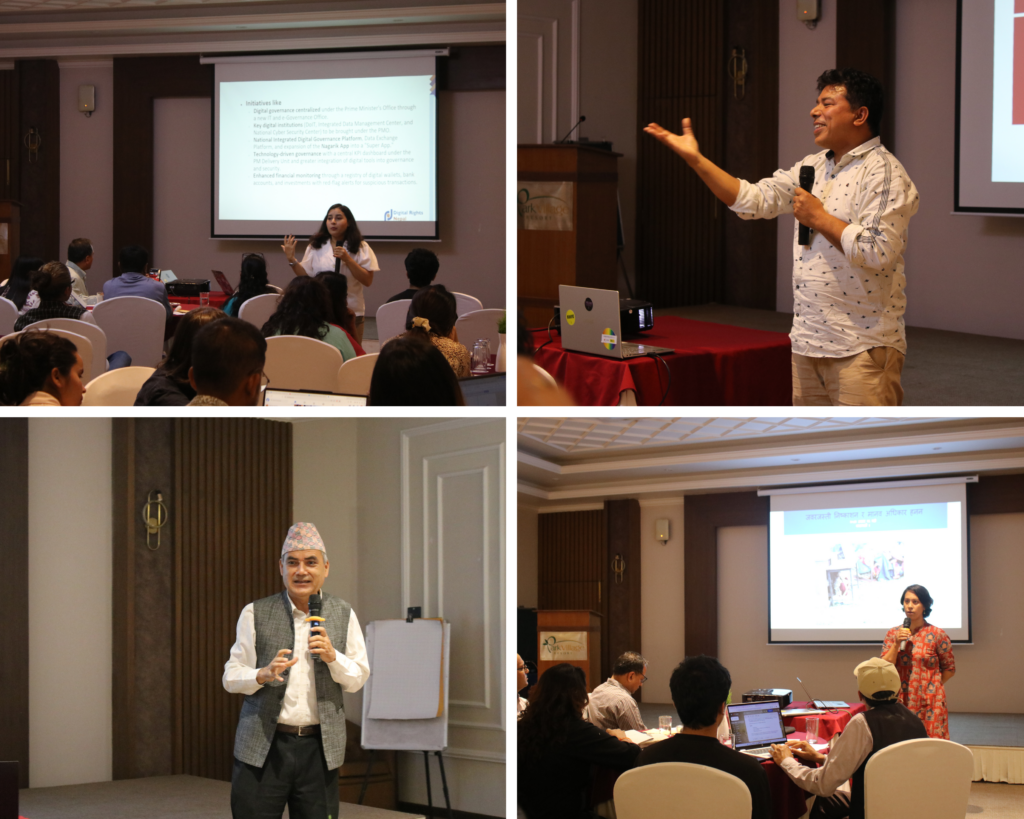
Participants discussed the realities faced by landless communities affected by forced evictions, including displacement, loss of livelihoods, disruption to children’s education and growing economic insecurity. Discussions also focused on the narratives portraying landless communities living on the riverbanks and other public lands as “illegal encroachers”, with participants calling for greater recognition of landlessness as a structural human rights issue rather than simply a question of illegality.
Participants also examined contradictions in laws governing forced evictions and emphasised that the right to adequate housing should remain central to any government responses. Participants were also updated on ongoing litigation and other legal initiatives related to recent eviction cases in Kathmandu.
The third session explored the changing landscape of civic space, digital rights and freedom of expression in Nepal. Sadichha Silwal of Digital Rights Nepal expressed concern over increasing restrictions on online expression, the growing use of surveillance and criminalization, and the rise of coordinated online harassment targeting journalists, women and individuals expressing dissenting views.
Journalist Ghanashyam Khadka highlighted the growing challenges facing media, including digital threats, declining public trust, misinformation, disinformation and policies that have made independent reporting increasingly difficult. Discussions emphasized that protecting freedom of expression and civic space remains essential to safeguarding human rights and rule of law and enabling citizens to participate meaningfully in public life.
Drawing on more than four decades of experience, human rights defender and former Amnesty Nepal Chairperson Charan Prasai reflected on the evolution of Nepal’s civic space and democratic struggles. He presented an analogical overview of the people’s movement in 1990 and 2006 recalling how civil society, non-governmental organisations, students, professionals and ordinary citizens mobilized and contributed and often played leading roles for systemic political changes such as the abolition of the party-less Panchayat system and the direct rule of King Gyanendra. He emphasized that the country’s democratic gains have always resulted from collective citizen participation and action rather than the efforts of individual political leaders. He acknowledged the mobilization of Gen-Z activists and youths during 2025 September movement and their aspirational drive for good governance, equity, and justice in Nepal, and called for the Gen Z activists to assert and persist in their roles as critical observers, facilitators and watchdogs against each and every action of the government lest their aspirations and dreams for a more just and human rights respecting Nepali are not dumped.
Looking ahead, Prasai stressed that the future of Nepal’s human rights movement depends on meaningful engagement with younger generations and called for stronger intergenerational collaboration between experienced human rights defenders and Gen-Z activists.
Participants also reflected on broader trends affecting Nepal’s democratic landscape, including weakening institutional independence, the growing influence of anti-rights movements, increasing inequalities and the need to strengthen protections for Indigenous Peoples’ rights.
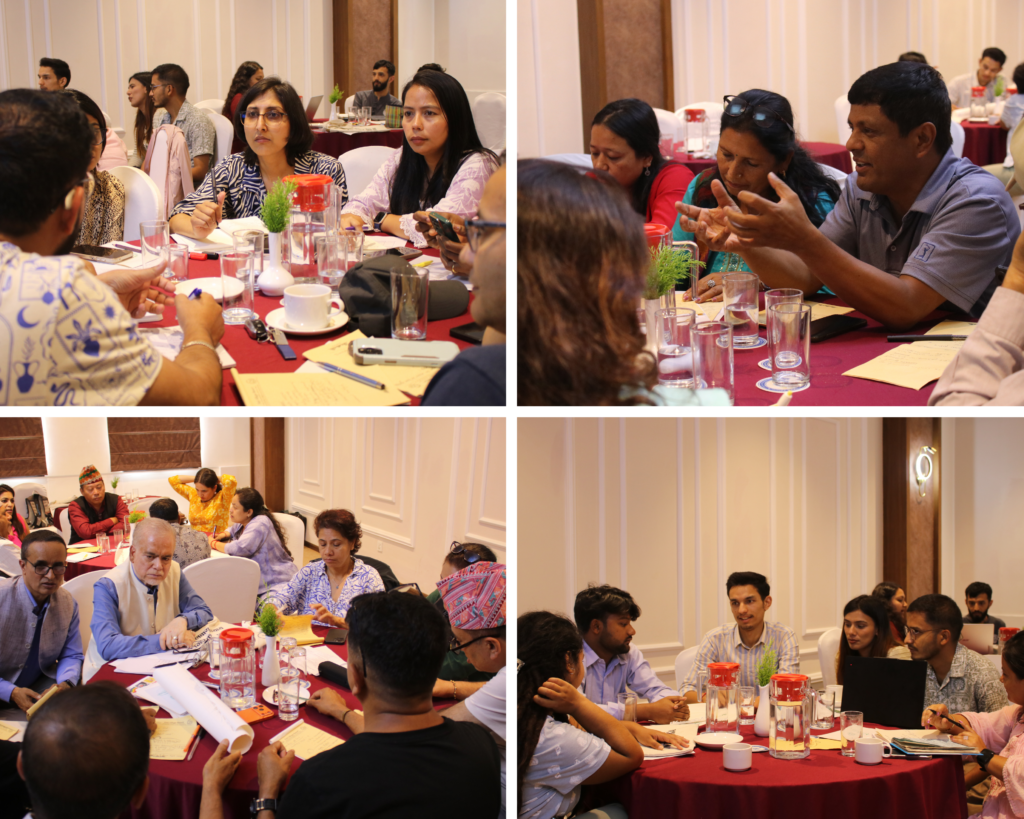
The programme concluded with a strategic reflection session that encouraged participants to move beyond issue-specific advocacy towards stronger collaboration across Nepal’s human rights movement. Through thematic and mixed-group discussions, participants identified practical opportunities to improve coordination, strengthen rapid response mechanisms, expand strategic litigation, improve digital security, counter misinformation and deepen collaboration with independent media.
A recurring theme throughout the discussions was the importance of engaging young human rights defenders and fostering stronger intergenerational leadership. Participants agreed that building resilient movements requires sustained collaboration across organisations, sectors and generations.
Throughout the programme, Bikash Basnet, Director of Advocacy Forum Nepal, also highlighted the value of collective action and sustained collaboration among civil society organisations to address Nepal’s evolving human rights challenges. He emphasised that stronger coordination and solidarity are essential to advancing accountability, protecting civic space and ensuring access to justice.
The programme concluded with a shared commitment to strengthen collective action in response to Nepal’s interconnected human rights challenges. Participants recognized that issues such as transitional justice, forced evictions, shrinking civic space and discrimination cannot be addressed in isolation, and reaffirmed the importance of solidarity, coordinated advocacy and evidence-based public engagement to advance human rights and access to justice in Nepal.