
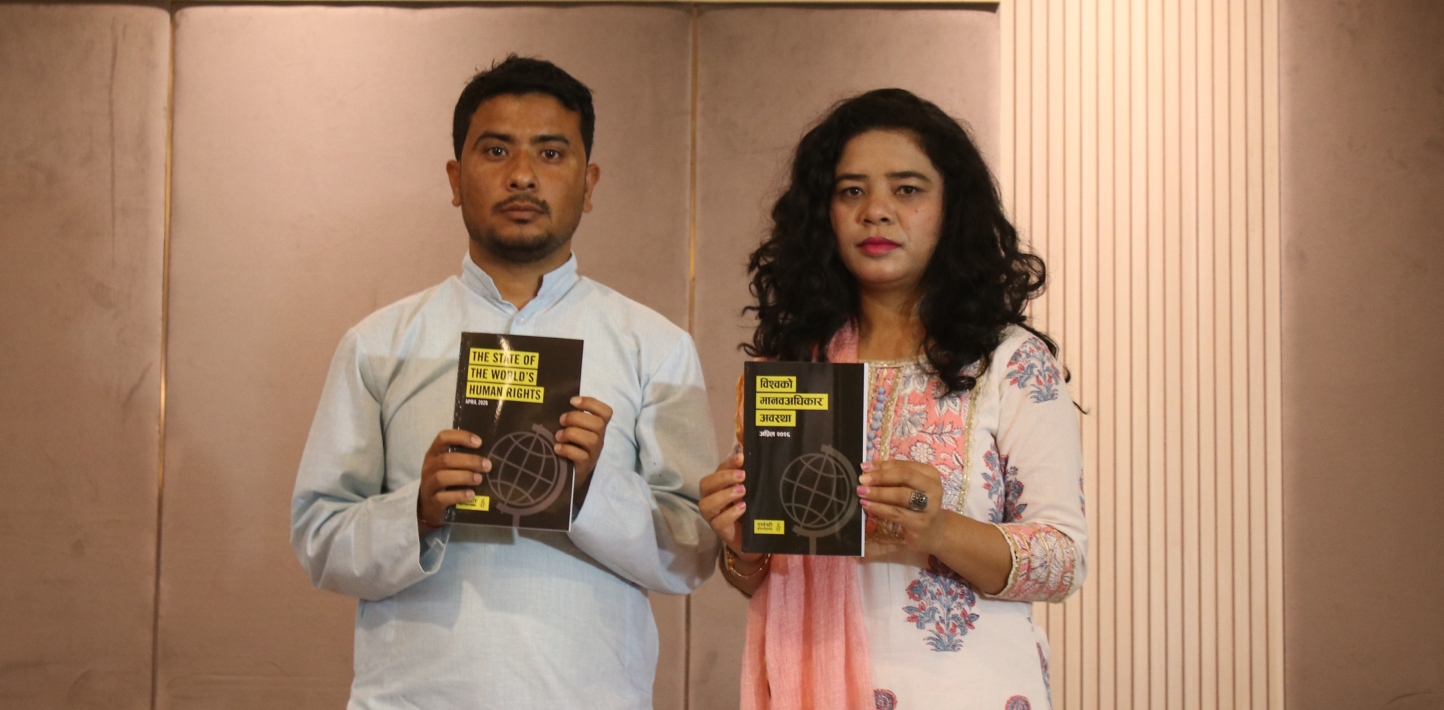
Amnesty International Nepal launched The State of the World’s Human Rights Report 2025/26 during a programme held in Kathmandu on 21 April 2026. The annual report covers 144 countries and provides a comprehensive overview of global human rights trends and developments over the past year (2025), highlighting key patterns, emerging risks, and areas of concern across regions.
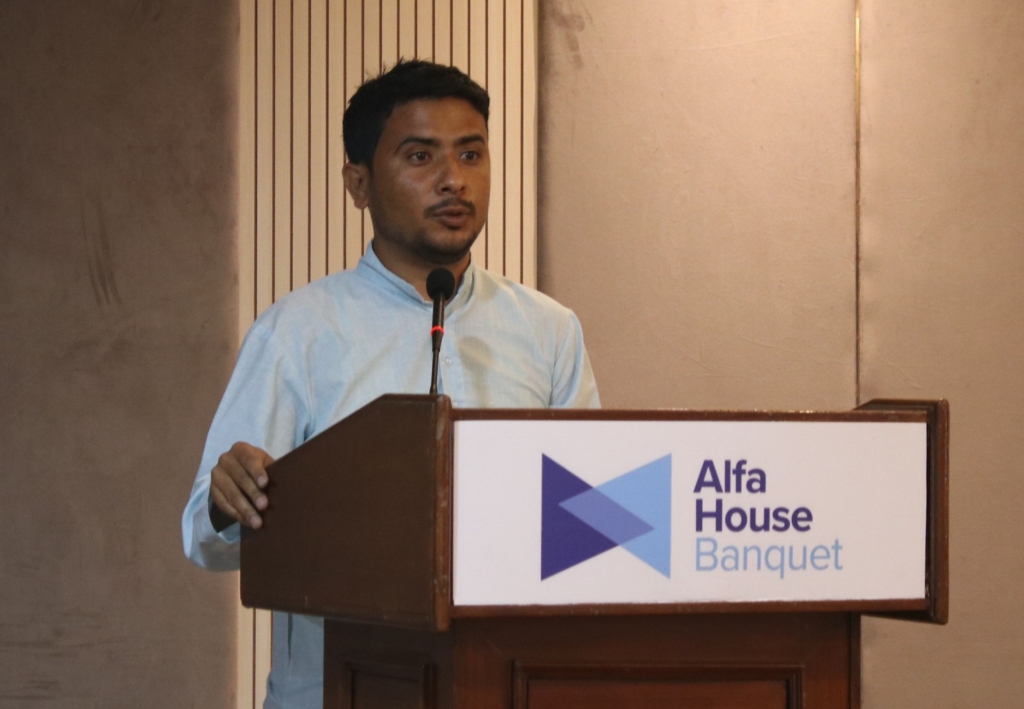
The report was jointly unveiled by Bipin Budhathoki, Chair of Amnesty International Nepal, and Gita Rasaili, human rights defender and chair of the Conflict Victim Women National Network. The launch event brought together around 100 participants, including representatives from the media, diplomatic community, civil society organisations, activists, and rights holders.
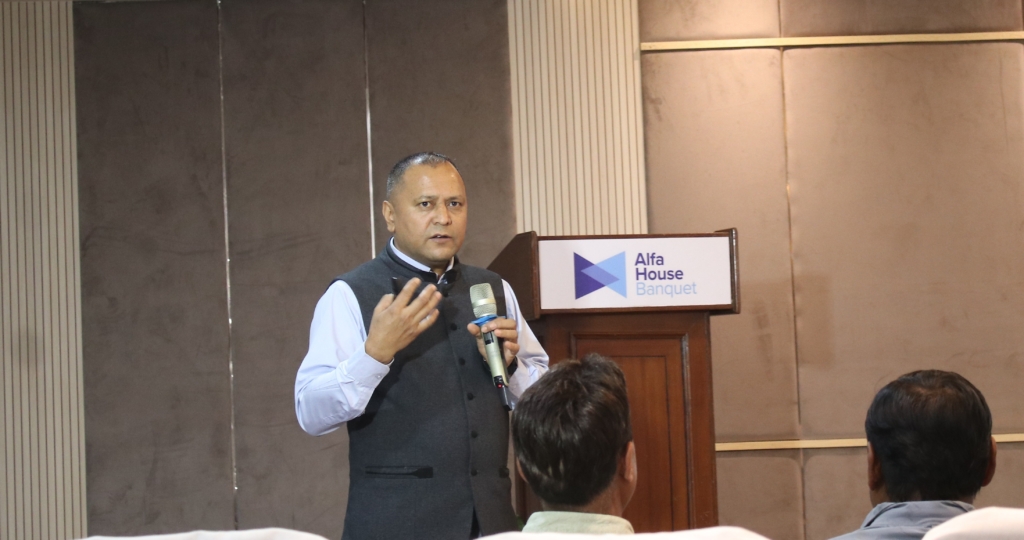
At the launch, Director of AI Nepal Nirajan Thapaliya presented the key findings of the report, including an overview of the human rights situation in Nepal. He noted that the report focuses on identifying broader patterns and systemic trends rather than documenting individual cases and does not rank or compare countries. The report also offers regional analyses spanning Asia-Pacific, the Americas, Europe, Africa, and the Middle East and North Africa (MENA).
Amnesty International’s annual report this year underscores a concerning global trajectory, where human rights are increasingly under strain from powerful states, corporate actors, and organized anti-rights movements. It warns of growing challenges to multilateralism, international law, and accountability mechanisms, which together risk weakening long-standing protections for human rights worldwide.
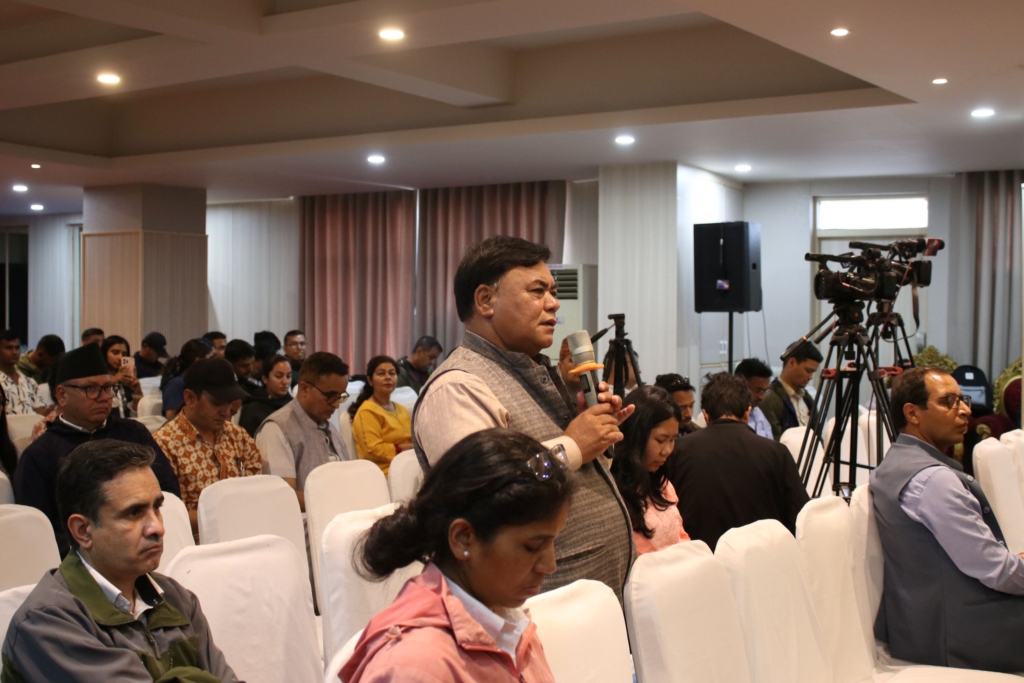
The report further documents how conflicts, political instability, and disregard for international norms are contributing to widespread violations across multiple regions. It highlights that the erosion of human rights is no longer gradual but is accelerating in ways that threaten both global stability and the everyday lives of millions of people. The presentation was followed by an interactive Q&A session. Issues such as violence against Dalit communities, discrimination against LGBTIQ individuals, and gaps in addressing economic, social and cultural (ESC) rights were highlighted during the discussion. Participants also reflected on broader global human rights challenges and the complexities of documenting them.
In his closing remarks, Chair Budhathoki reiterated that the report highlights key trends and patterns of human rights violations and abuses in Nepal and other countries. He then thanked participants for their engagement and continued support.
The launch in Kathmandu echoed a broader global call for renewed commitment to human rights. As the report makes clear, addressing these challenges will require coordinated efforts from governments, international institutions, and civil society to ensure that the principles of human dignity, justice, and accountability are upheld.