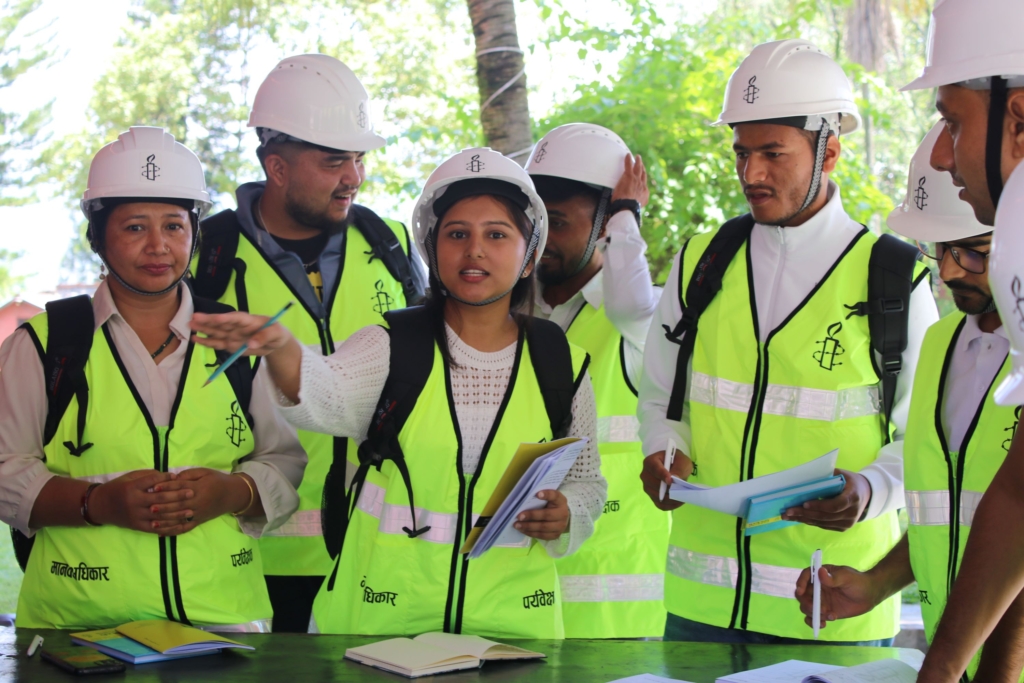

With an aim to contribute to ensure authorities respect, protect and promote peoples’ right to freedom of peaceful assembly as per international human rights standards and obligations, and to confront unprecedented worldwide threat to the right to protest, Amnesty International is running a global campaign called “Protect the Protest”.
As a component of this flagship global campaign Protect the Protest, AI Nepal, with other sections around the world, is launching a Protest Observation programme this year. The program aims to train Protest Observers who will monitor and report on potential human rights violations during protests.
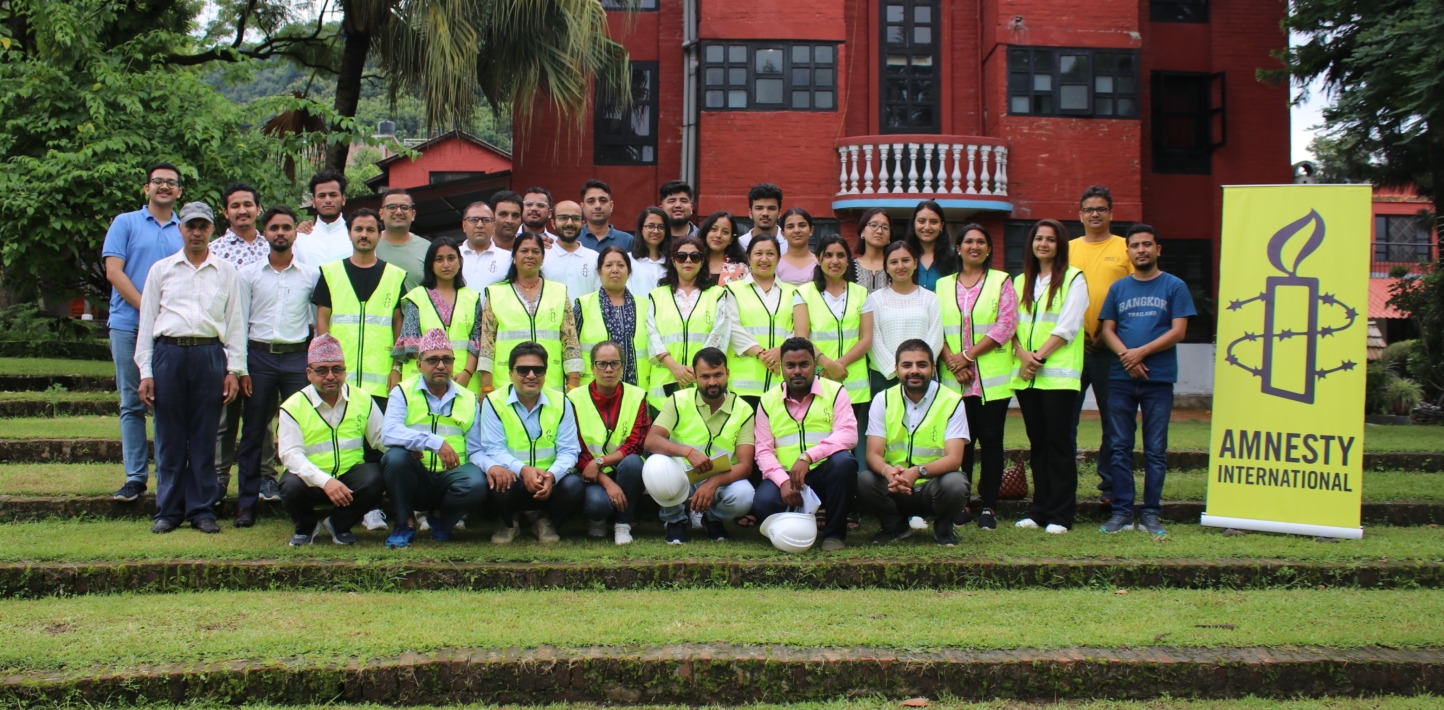
In Nepal, the Protest Observation programme started with an introductory training program, in collaboration with the South Asia Regional Office, which was organized in Dhulikhel, Kavre, from 27-29 December last year. At the program, 25 people – including AI Nepal Secretariat staff and members – were trained. The three-day workshop educated participants about national and international laws pertaining to the right to assembly, on how to observe protests, what protocols to follow to be safe and report back accurately, among others.
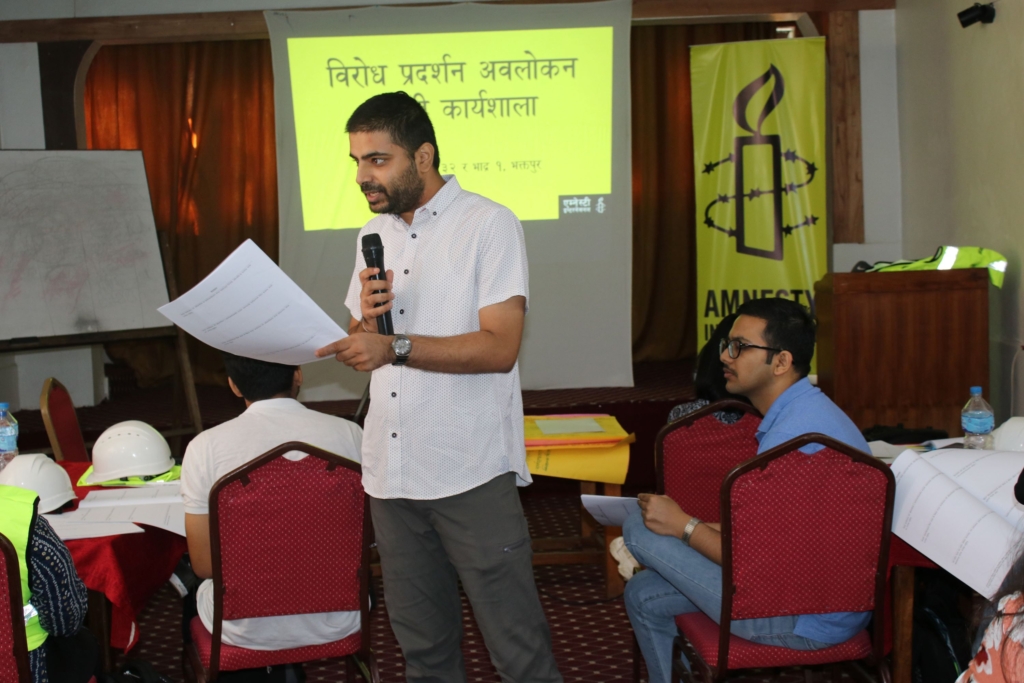
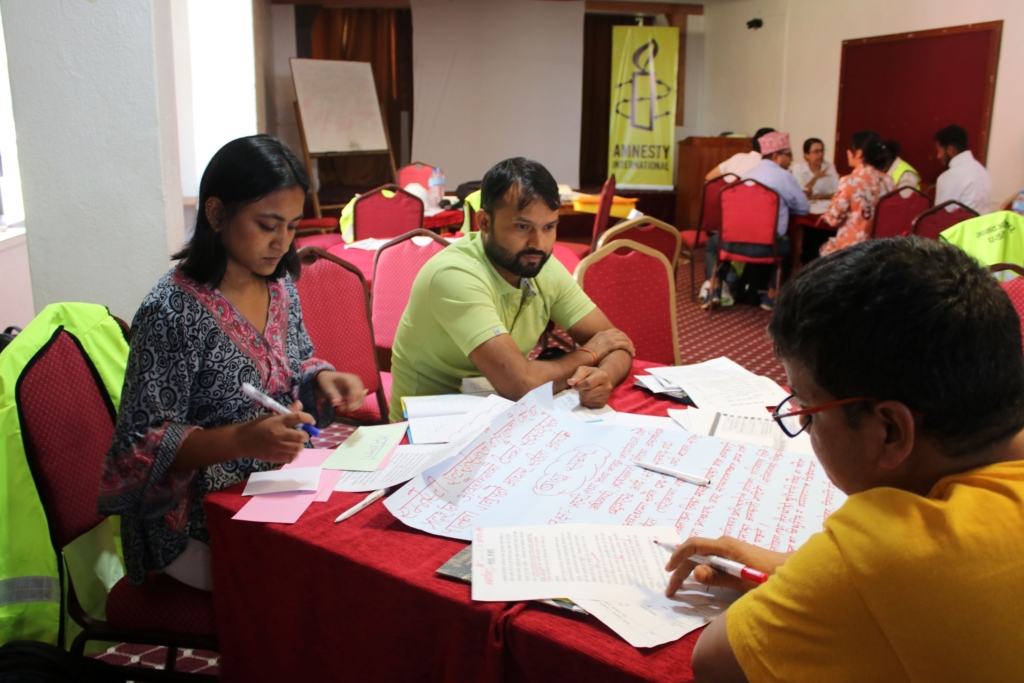
Following up on that training, AI Nepal Secretariat staff delivered a pre-deployment training to 34 Amnesty International Nepal members on 16-17 August at Bhaktapur Guest House, Bhaktapur. The workshop was led by AI Nepal Human Rights Education Coordinator Kundan Raj Sharma, with sessions by AI Nepal Director Nirajan Thapaliya, AI Nepal Campaigns Coordinator Ashmita Sapkota, and AI Nepal Media and Communications Coordinator Marissa Taylor.
Members who participated in the training are now expected to be present at protests as Protest Observers in Bagmati and Madhesh provinces. The final objective of the Protest Observation programme is to prepare a report on the attitude of police and relevant authorities towards protests in Nepal. This report will assist in legal research on governance of protests in Nepal, as it will serve as a resource to carry forward advocacy and campaigns on ‘Protect the Protest’. It will also help in increasing awareness among AI Nepal members, partners, stakeholders and the public on legal and practical impediments on the full exercise of right to protest in Nepal.
At the programme in Bhaktapur, following a quick welcome speech, AI Nepal Director Nirajan Thapaliya briefed AI Nepal members about the purpose of the Protest Observation program. A brief welcome note was also delivered by Dhruba Kumar Karki, former acting chairperson of AI Nepal, who stressed on the importance of protests and the need for such a programme.
The note was followed by a quick introduction to Amnesty’s Protect the Protest Global Campaign, which was facilitated by AI Nepal Campaigns Coordinator Ashmita Sapkota.
The two-day workshop covered several key aspects of protest observation through interactive participatory exercises with the members. There were discussions on the fundamental right to protest (focusing on how this right is protected and upheld within the international legal framework) and on the provisions and practices related to protests in Nepal, providing insights into how the law governed such activities. Participants also learned about effective protest observation, including guidelines and forms necessary for monitoring events.
Additionally, the workshop addressed possible risks and how to overcome them during protest observations, equipping attendees with strategies to handle potential challenges. Finally, a session on the code of conduct for protest observers was also discussed, outlining the ethical standards and responsibilities expected from those involved in monitoring protests.
The program wrapped up with a motivating address from AI Nepal Chairperson Bipin Budhathoki, who emphasized the urgent need for vigilant and effective observation to protect the right to protest.