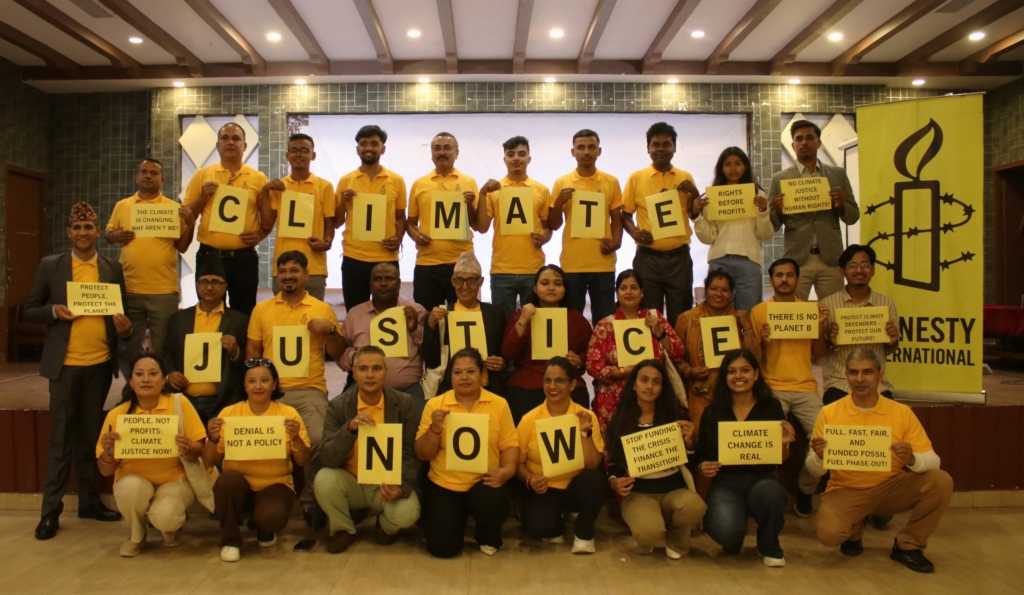

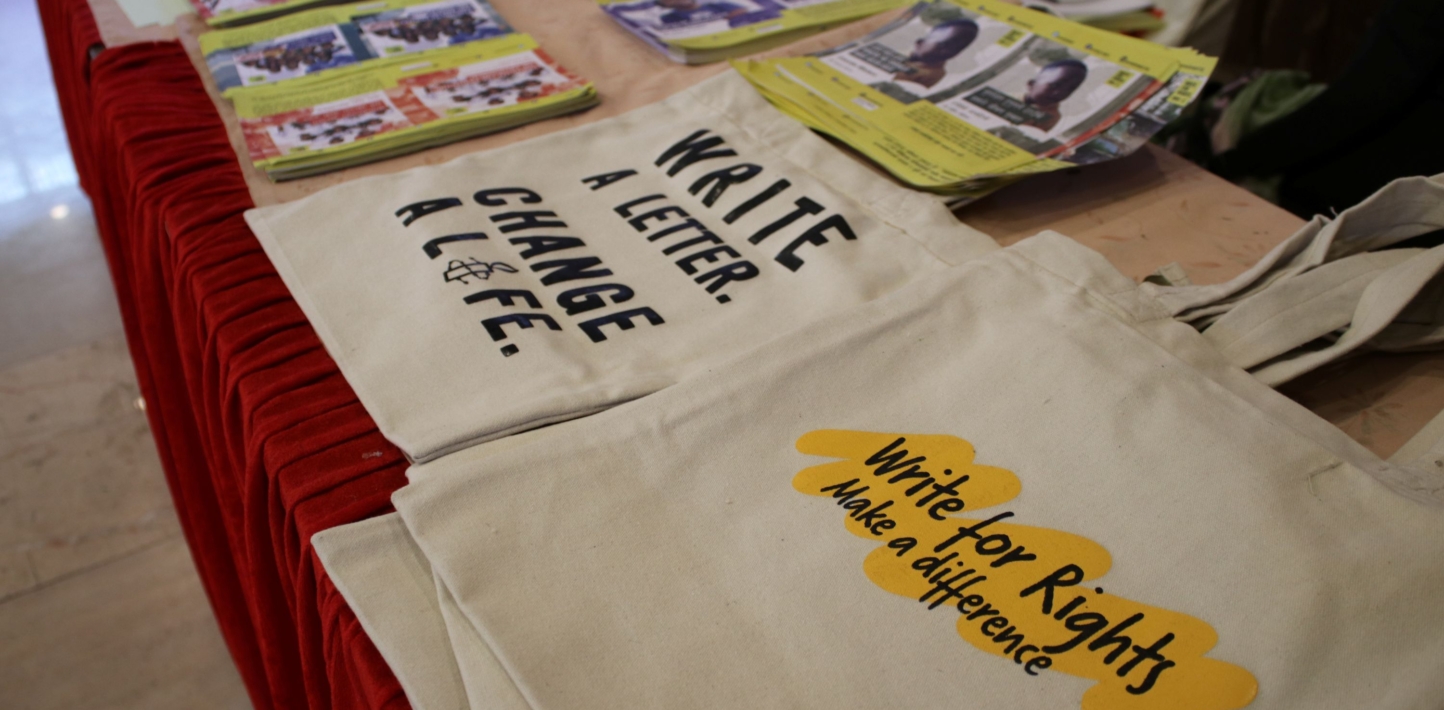
Amnesty International Nepal (AI Nepal) launched the 2025 edition of its global Write for Rights (W4R) campaign in Hetauda urging Nepal’s Home Minister to address the problems of forced evictions in Nepal in accordance with international human rights standards and Nepal’s constitutional guarantees. Alongside this national focus, Amnesty members will also collect petitions for five global cases of human rights defenders and communities fighting injustice.
The day-long planning workshop brought together over 90 Amnesty members from across the country. Designed to inspire, educate, and strategize, the workshop featured interactive sessions, group discussions, and mock activities that helped participants explore creative ways to mobilize support for human rights.
The workshop started with an overview of the campaign’s objectives. There was also a discussion on the topic of ‘Human Rights Defenders’, exploring who they are, what drives their work, and the challenges they face.
A lively Write for Rights word search activity also added energy to the morning before participants learned about the campaign’s history, global reach, and past successes. Through the discussions, participants reflected on how a simple act like letter writing can lead to real change — freeing prisoners of conscience, influencing policy reforms, and amplifying the voices of those silenced.
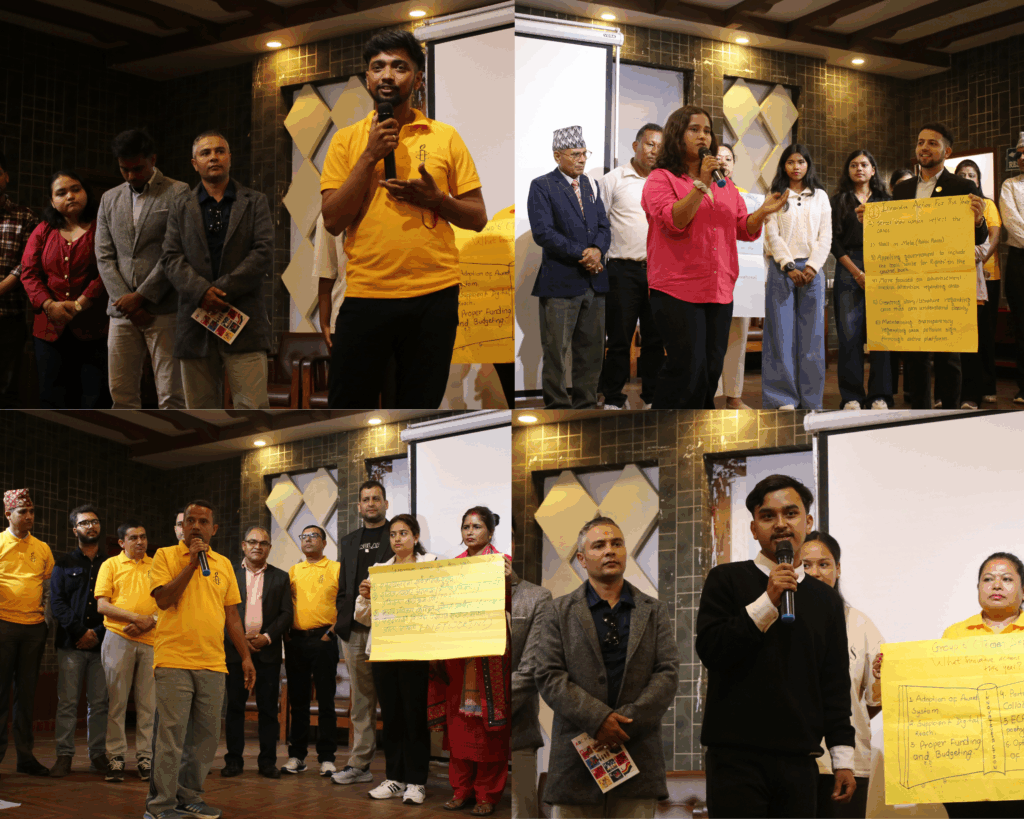
The workshop also took a deep dive into the selected cases of this year’s W4R campaign. This year, Amnesty Nepal’s Write for Rights local campaign runs under the slogan “Aawas gumaunu adhikar gumaunu ho” (which translates to “Losing one’s home means losing one’s rights”.) The campaign focuses on the right to adequate housing, especially for marginalized and landless communities, and calls on authorities to halt forced evictions and respect the right to adequate housing.
Forced evictions in Nepal have uprooted hundreds of families in recent years, often without due process, compensation, or meaningful rehabilitation. Through this campaign, Amnesty Nepal aims to advocate for stronger protections to ensure that every person in Nepal can live with dignity and security.
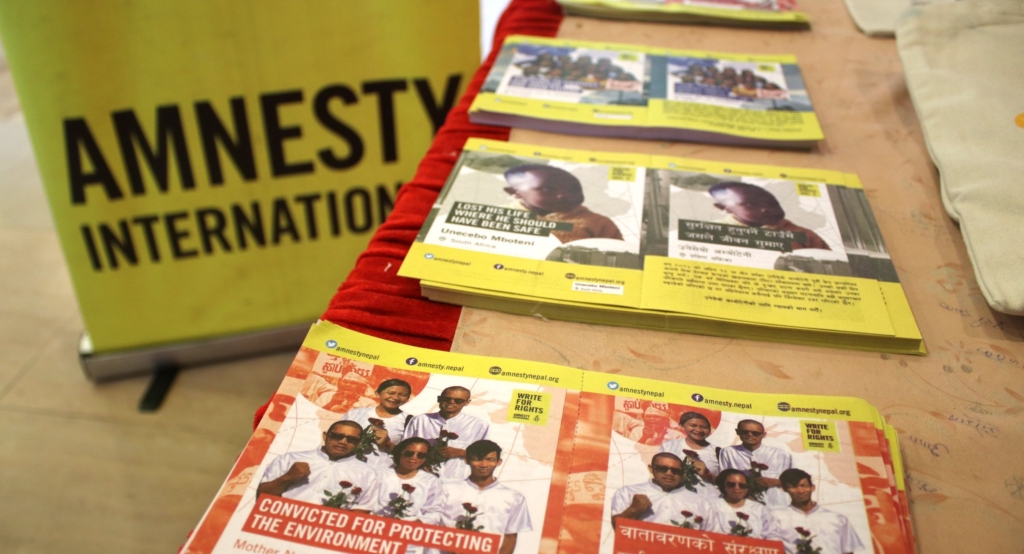
In addition to the national case in Nepal, the 2025 Write for Rights campaign highlights five emblematic cases of courage and resilience from around the world. First is Ellinor Guttorm Utsi from Norway, an Indigenous Sámi reindeer herder fighting to protect her community’s ancestral grazing lands from industrial wind turbine projects that threaten their traditional way of life and the natural ecology. Next are the Guerreras por la Amazonía from Ecuador, a group of young Indigenous activists aged 10 to 20, confronting toxic gas flares that poison their communities in the Ecuadorian Amazon.
Amnesty International Nepal is also advocating for Mother Nature Cambodia, a youth-led environmental group whose five members are serving six to eight-year prison sentences for peacefully protesting environmental destruction; Amnesty is calling for their immediate release.
Another case is Sai Zaw Thaike from Myanmar, a photojournalist sentenced to 20 years of hard labor for reporting on the aftermath of Cyclone Mocha, highlighting the ongoing silencing of journalists under the country’s military regime.
Finally, there is Unecebo Mboteni from South Africa, a three-year-old boy who tragically died after falling into a pit toilet at his preschool, exposing systemic government neglect. One year later, his family is still awaiting justice and accountability.
The participants of the workshop also evaluated past campaign experiences and brainstormed innovative advocacy ideas for this year. Discussions centered on community engagement, youth-led mobilization, digital outreach, and the use of art and storytelling to inspire empathy and action. There were also sessions on Human Rights Education and Communications which focused on clarity and accountability in campaign messaging and documentation. There was also a sharing of the findings of the report “Nowhere to Go: Forced Evictions in Nepal”.
To put learning into practice, participants also took part in a mock petition collection activity, simulating real-life scenarios where they had to convince non-Amnesty individuals to sign petitions. The exercise highlighted the importance of empathy, active listening, and storytelling in building trust with communities.
The workshop concluded with reflections on human rights action around COP30, emphasizing the link between climate justice, housing, and human dignity.