
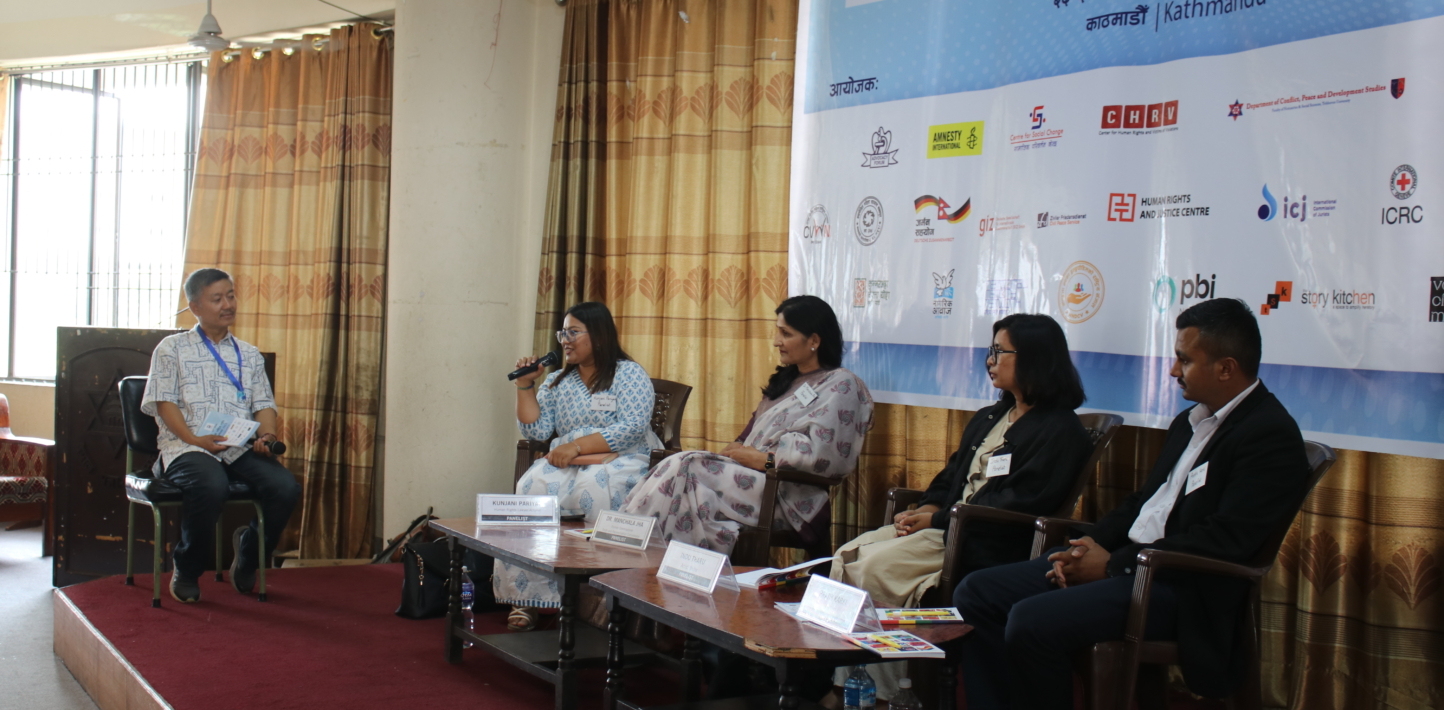
As part of the Second National Memory Conference in Kathmandu, Amnesty International Nepal hosted a panel discussion titled “Connecting Movements: Intergenerational Memory” on 9 June 2026 at Nepal Academy, Kamaladi, Kathmandu. The discussion brought together voices from Indigenous, Dalit, victim, women, and youth movements to reflect on how Nepal’s armed conflict that lasted from 1996 to 2006 is remembered across generations and how these memories continue to shape ongoing struggles for truth, justice, accountability, and human rights.
The panelists included Indu Tharu, artist and writer; Pratik Karki, lawyer and conflict survivor; Dr. Manchala Jha, Former Commissioner, Truth and Reconciliation Commission (TRC); and Kunjani Pariyar, human rights lawyer and activist. The session was moderated by journalist Dewan Rai.
Remembering the conflict
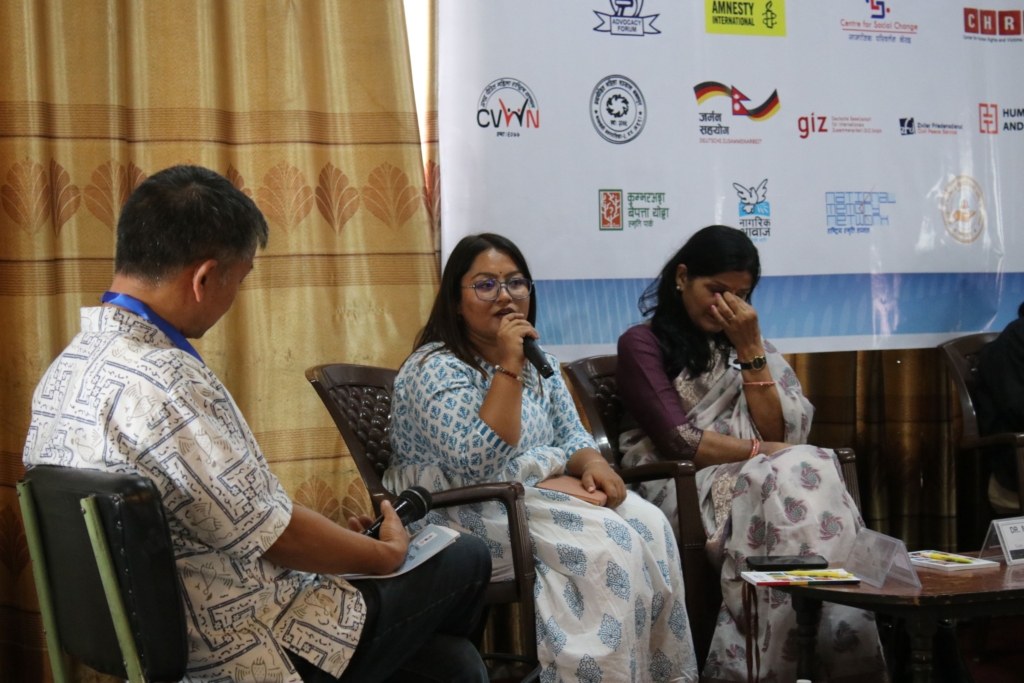
The discussion began with panelists sharing their personal experiences and memories of Nepal’s armed conflict. Ms. Pariyar reflected on being born in the year the armed conflict began. She shared that while she does not have direct memories of the war itself, her work with conflict victims has exposed her to the lasting pain, unresolved trauma, and lack of accountability that continue to affect survivors and families even two decades later.
Dr. Jha recalled being a student living in Kathmandu when the conflict escalated. She spoke about the atmosphere of fear and uncertainty that permeated daily life and the sense of insecurity experienced by many young people during that period.
Ms. Tharu shared how the conflict shaped her childhood. Her father, a writer critical of both the state and its security forces, was frequently under surveillance, and police and army personnel were often present around their home. She highlighted the linguistic and cultural barriers between the state and marginalised communities, noting that while the state communicates primarily in Nepali, many members of her Tharu community—including her grandmother and mother—do not fully understand the language. This disconnect, she argued, reflects the double marginalisation experienced by Indigenous communities. She also spoke about the erosion of cultural practices and traditions during and after the conflict.
Mr. Karki shared the deeply personal trauma of losing both of his parents during the conflict. His testimony underscored the profound and lasting impact of the war on survivors and families who continue to seek truth and justice.
Why Memory and Memorialization Matter
The discussion then turned to the importance of memory and memorialisation. Ms. Pariyar posed critical questions about how the state remembers the conflict: Who shapes collective memory? Whose stories are centered? Are the memories of victims prioritised, or do state narratives and political actors dominate public remembrance? She emphasised that discussions of memory must also acknowledge the structural inequalities—particularly those rooted in caste, ethnicity, and social exclusion—that contributed to the outbreak of the conflict. Remembering the war without examining these underlying injustices risk overlooking its root causes.
Dr. Jha reflected on her experience at the Truth and Reconciliation Commission, noting the Commission’s efforts to collect as many complaints and testimonies as possible despite significant legal and budgetary constraints. She emphasised that meaningful memorialisation requires confronting the social, economic, and political inequalities that fueled the conflict in the first place.
Ms. Tharu challenged participants to consider a fundamental question: Whose memories are preserved? She argued that official histories often focus on political leaders, military actors, and major events while overlooking the experiences and struggles of ordinary people. The everyday realities of farmers, Indigenous communities, women, and marginalised groups are frequently excluded from historical narratives despite being equally significant. She advocated for exploring alternative forms of memorialisation that can better capture these lived experiences.
Mr. Karki stressed that conflict narratives often simplify history into stories of heroes and villains. In reality, he noted, serious abuses and violations were committed by multiple actors during the conflict. He emphasised that failing to institutionalise memory creates space for denial, distortion, and historical amnesia. Without truth and justice for all victims, society remains trapped in unresolved conflict and competing narratives.
Ms. Pariyar added that memory without justice can become a source of continued suffering, stressing that for many victims and survivors, remembrance is inseparable from accountability. Two decades on, many families continue to relive their trauma while waiting for answers and justice.
Ms. Tharu further highlighted how Indigenous and other marginalised communities were often automatically labelled as “Maoists” and subjected to torture because of their social and economic backgrounds during the conflict. And as members of largely agrarian and marginalised communities, their experiences and suffering have always been pushed to the margins of public memory. She argued that the state has historically neglected and erased these memories rather than preserving them. The trauma carried by affected families remains largely unacknowledged.
From his personal experience, Mr. Karki raised the question of how society remembers those who are no longer alive to tell their own stories. He shared how for many victims who were killed or disappeared, memory becomes the only means through which their experiences can continue to be acknowledged.
Can Memory Serve as Evidence?
The final segment of the panel explored whether personal memories and testimonies can serve as evidence in transitional justice processes. Ms. Pariyar emphasised the importance of how the state remembers. She argued that national memory should be built on principles of truth, accountability, respect, and dignity. Individual experiences and memories must be recognised and incorporated into collective national memory rather than being dismissed as isolated stories.
Dr. Jha stressed that victims’ testimonies and memories should be treated as valuable forms of evidence, particularly given the nature of conflict-related crimes. Many violations occurred under extraordinary circumstances, making conventional forms of evidence difficult to obtain. Transitional justice mechanisms must therefore recognise the unique evidentiary challenges associated with conflict-era crimes.
Ms. Tharu called for a decolonial approach to memory and justice. She argued that different forms of suffering cannot simply be grouped together and treated as identical. Memorialisation efforts must recognise the distinct experiences of different communities and the specific forms of violence and exclusion they endured.
Mr. Karki noted that for many victims, memories are all that remain. Even in cases where documentary evidence exists, victims often face significant barriers in proving violations. More than twenty years after the conflict, much evidence has been lost, destroyed, or tampered with. Without victims’ testimonies, many cases would have little or no evidentiary basis at all. He questioned whether the state is prepared to accept survivors’ accounts as legitimate evidence in the pursuit of justice.
Questions and Reflections from the Audience
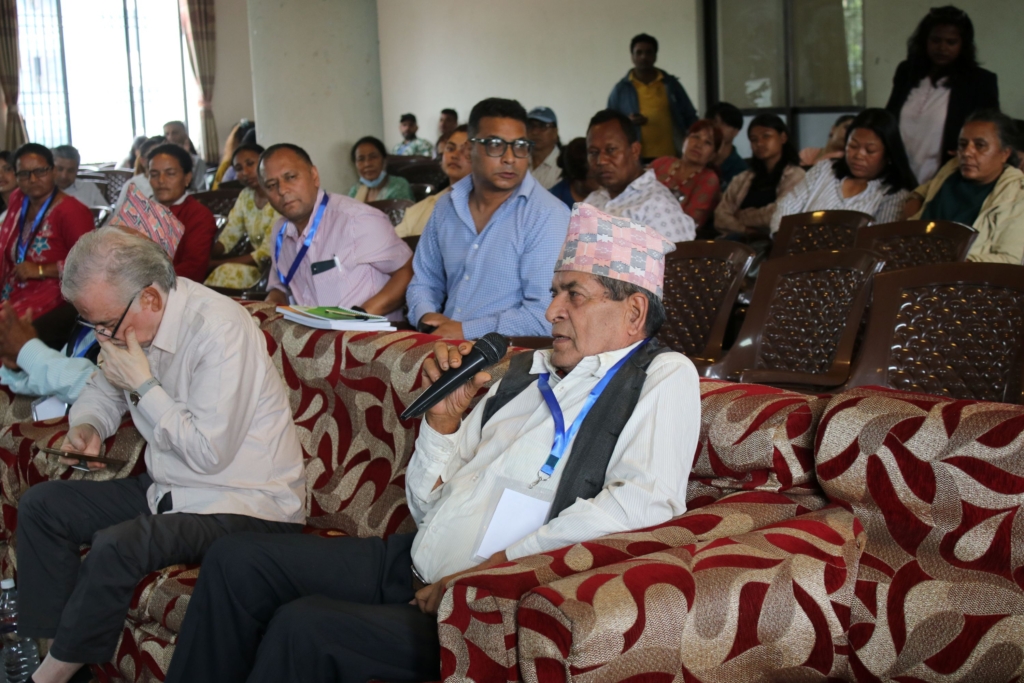
The question-and-answer session highlighted ongoing concerns about Nepal’s transitional justice process. One participant, whose two sons had been disappeared during the conflict, raised questions about the effectiveness of the Truth and Reconciliation Commission and the gaps that continue to prevent victims from accessing truth and justice.
Audience members also discussed how to engage younger generations in conversations about the conflict and memorialization. Questions were raised about how different generations remember the war and what those differing memories mean for justice and accountability today.
Several participants stressed the importance of institutionalising memory. Without formal efforts to preserve and transmit these histories, memories risk being forgotten, distorted, or reduced to myths. The discussion concluded with a shared recognition that preserving memory is not only about documenting the past but also about ensuring that future generations understand the causes, consequences, and unresolved legacies of Nepal’s armed conflict.