
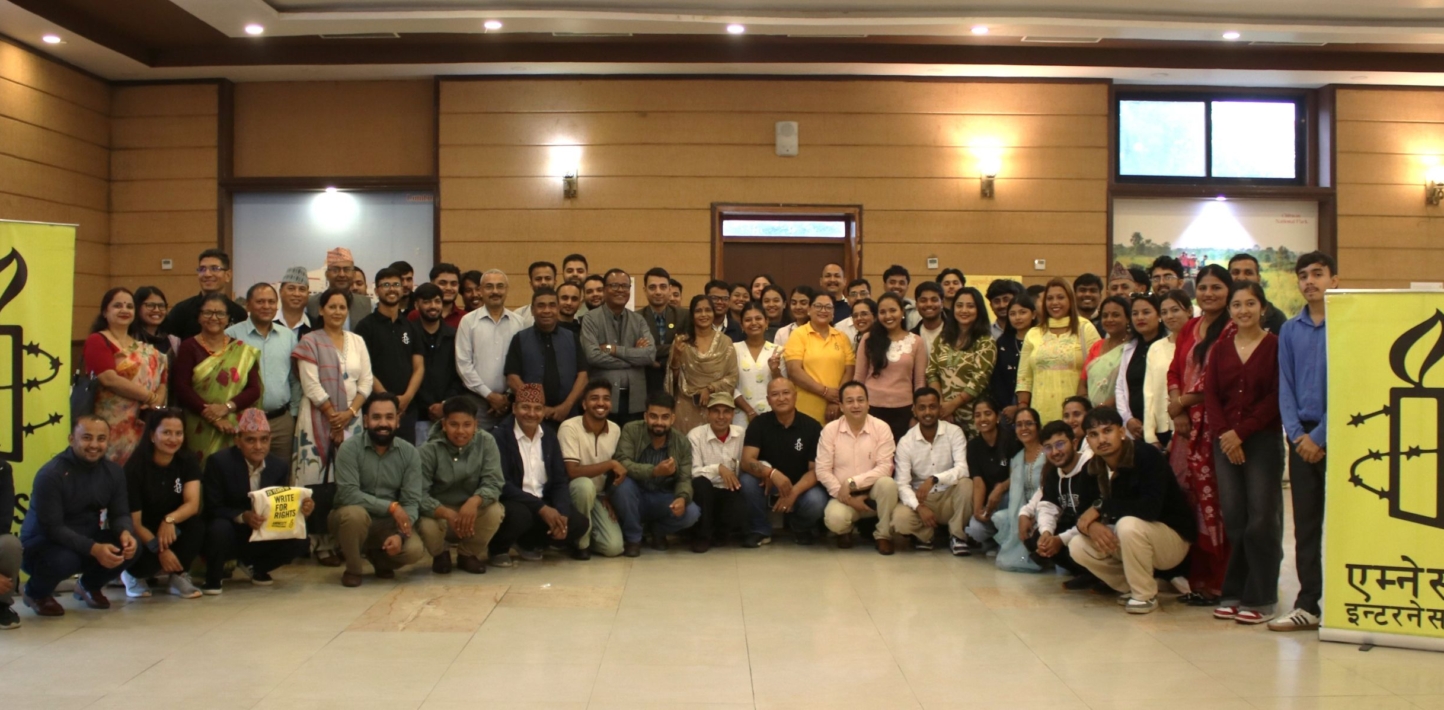
On 31 October, more than 75 Amnesty International Nepal members gathered in Hetauda to prepare for the 2026 Write for Rights (W4R) campaign, Amnesty International’s flagship annual global campaign for human rights. The planning workshop brought members together to explore the challenges facing human rights defenders, learn about the national and international cases of this year’s campaign and explore strategies to mobilise public support for individuals and communities whose rights are under threat.
For more than 25 years, Write for Rights has mobilised millions of people worldwide to stand up for those facing human rights violations. Through letters, petitions and public advocacy, the campaign urges authorities to end abuses, protect human rights and deliver justice.
This year’s global campaign highlights individuals and communities in countries including Egypt, Pakistan, El Salvador and Hong Kong. They include people targeted for defending human rights, challenging state repression and protecting Indigenous Peoples’ rights. In Nepal, the campaign focuses on the right to adequate housing, drawing attention to the devastating impact of forced evictions on marginalised communities.
This year’s Write for Rights campaign brings alive into people’s memories the harrowing scenes of government-led forced eviction operations carried out since 25 April in various parts of the Kathmandu valley that caused displacement of more than 15,000 people, including over 3,000 children. Families were forcibly removed from their homes without adequate prior notice, due legal process or alternative housing arrangements.
More than six months on, affected families continue to face uncertainty, with many lacking a permanent place to live and clarity about their future. Conditions for displaced people living in holding centres remain concerning. At least ten people have died, including deaths by suicide and deaths linked to a lack of timely access to medical treatment.
Against this backdrop, the workshop provided an opportunity for members to deepen their understanding of the human rights issues at the heart of this year’s campaign and the importance of sustained advocacy and solidarity.
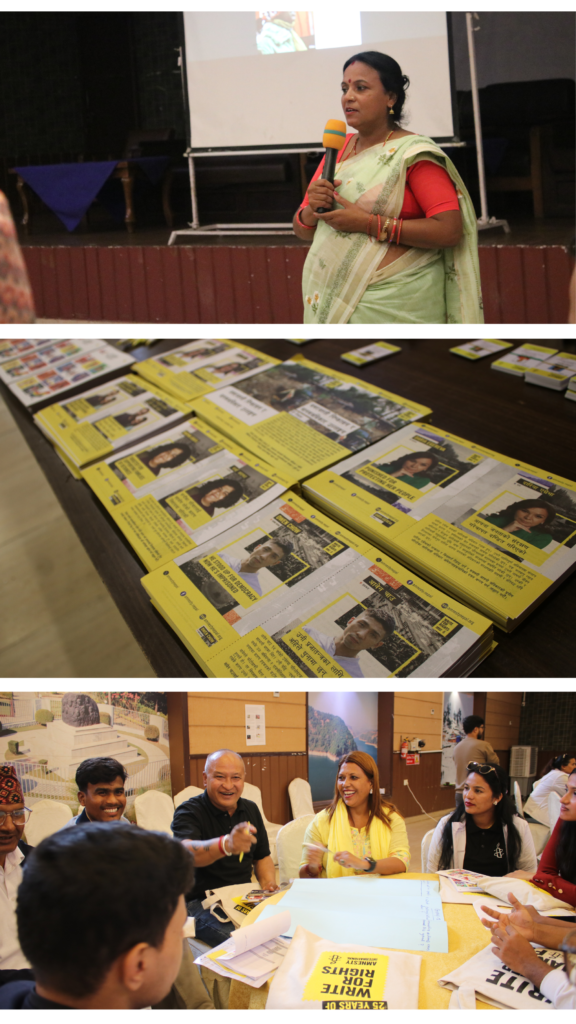
Participants also heard from Rita Mahato Chamar, a woman human rights defender whose case was featured in Amnesty International’s 2009 Write for Rights campaign. At the time, Rita faced death and rape threats for her work with the Women’s Rehabilitation Centre (WOREC), where she supported women and girls who had experienced violence, documented cases of abuse and helped survivors seek justice. Her work made her a target of hostility in her community, and even WOREC’s office was attacked. Following Amnesty’s global campaign, people from schools, universities and institutions around the world sent letters and messages of solidarity in support of her. The widespread mobilisation brought greater attention to her case and prompted local police and authorities to reach out and offer support. The harassment she faced eventually ended, but Rita has continued her work defending human rights and advancing women’s rights. Sharing her journey with participants offered a powerful reminder of how collective action can help protect human rights defenders, challenge intimidation and ensure that those fighting injustice do not stand alone.
A session on the history and achievements of Write for Rights explored how collective action, letter-writing and public mobilisation have helped bring international attention to human rights violations and contributed to positive changes in the lives of people whose cases have been taken up by the campaign. Likewise, a session on human rights defenders highlighted the critical roles of the human rights defenders in bravely standing up and speaking out for the protection of human rights, and in doing so, how they are targeted by authorities and non-state actors. Showing solidarity, support and voice to these human rights defenders all over the world is one of main objectives of Amnesty’s Write for Rights campaign.
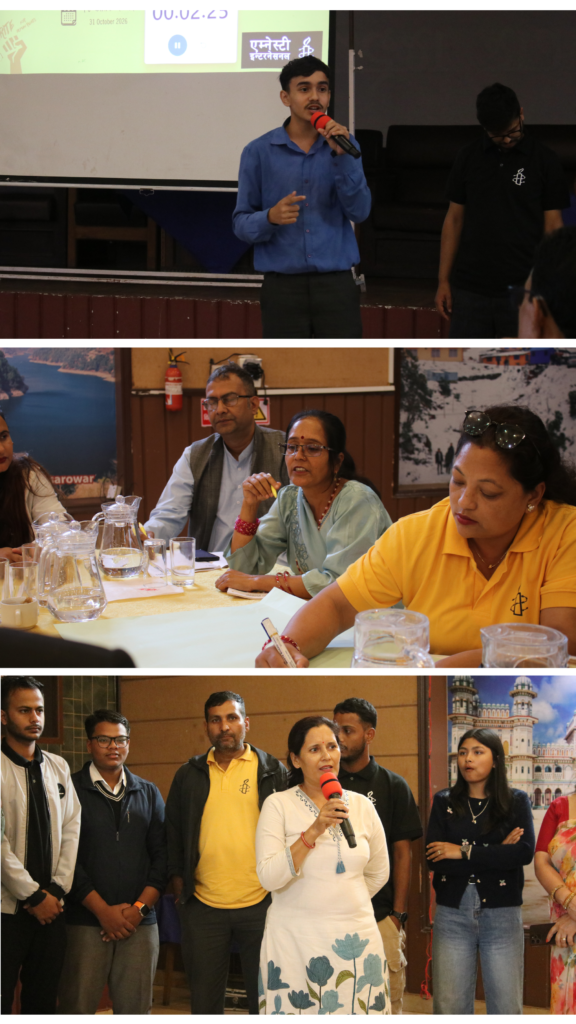
Through group discussions, Amnesty Nepal members also reflected on experiences from previous years, identifying successful approaches, challenges and opportunities to make this year’s campaign more effective and engaging.
The workshop concluded with group presentations and mock campaign sessions, giving participants an opportunity to put their ideas into practice and explore effective ways of communicating the cases and encouraging people to take action.
As Amnesty International Nepal launched its 2026 Write for Rights campaign, the workshop reaffirmed the importance of collective action in challenging injustice. Through letters, public advocacy and solidarity, Amnesty members and supporters will continue to amplify the voices of those whose rights are under threat and press for a world where everyone can live with dignity, freedom and justice.